
Our review highlights one of the core challenges in customer experience. Creating connected journeys across channels is hard, even for the best brands.
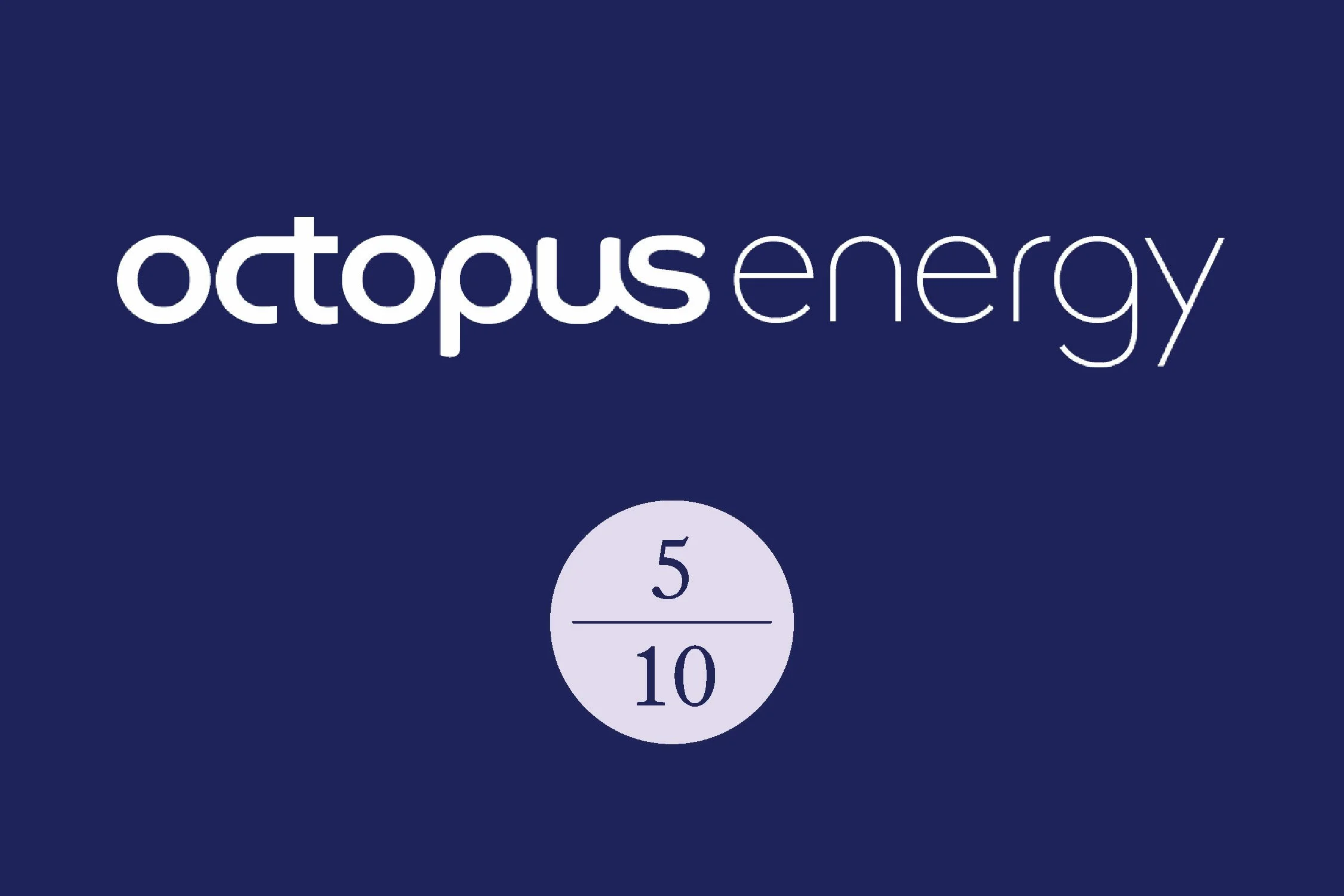
What is the AAWE Score?
The AAWE Score is calculated by rating initial customer expectations as well as the reality of their experience, both out of 10. We then work out the difference between the two scores to give the final result.
Joining Journey from Octopus Energy
The Expectation
Having recently moved house we were in need of an energy provider. Octopus are regularly held up as one of the best brands out there in terms of customer experience, and that’s even outside of the utility sector.
As it happened, the home we moved into was also currently supplied by Octopus. So we had every reason to join.
Our expectations were high. Octopus are a well known brand offering typically great customer experience, who are also the properties current provider. We anticipated a smooth journey ahead.
Expectation Score: 8/10
The Reality
A proactive and on-brand start
Within a few days of moving in, we received a letter from Octopus addressed to the occupier. It was in a pink envelope and the copy in the letter was personable and witty. A very on-brand touchpoint from Octopus.
We know every energy provider typically aims to send a letter to all new occupants. It’s in their interests to try and keep them from switching at a moment where customers are likely looking at other providers, but this moment struck a nice balance between being functional and giving us a sense of what it would be like to be a customer.
In the letter, there was a simple URL to visit to enter our details and become customers. So we started there.
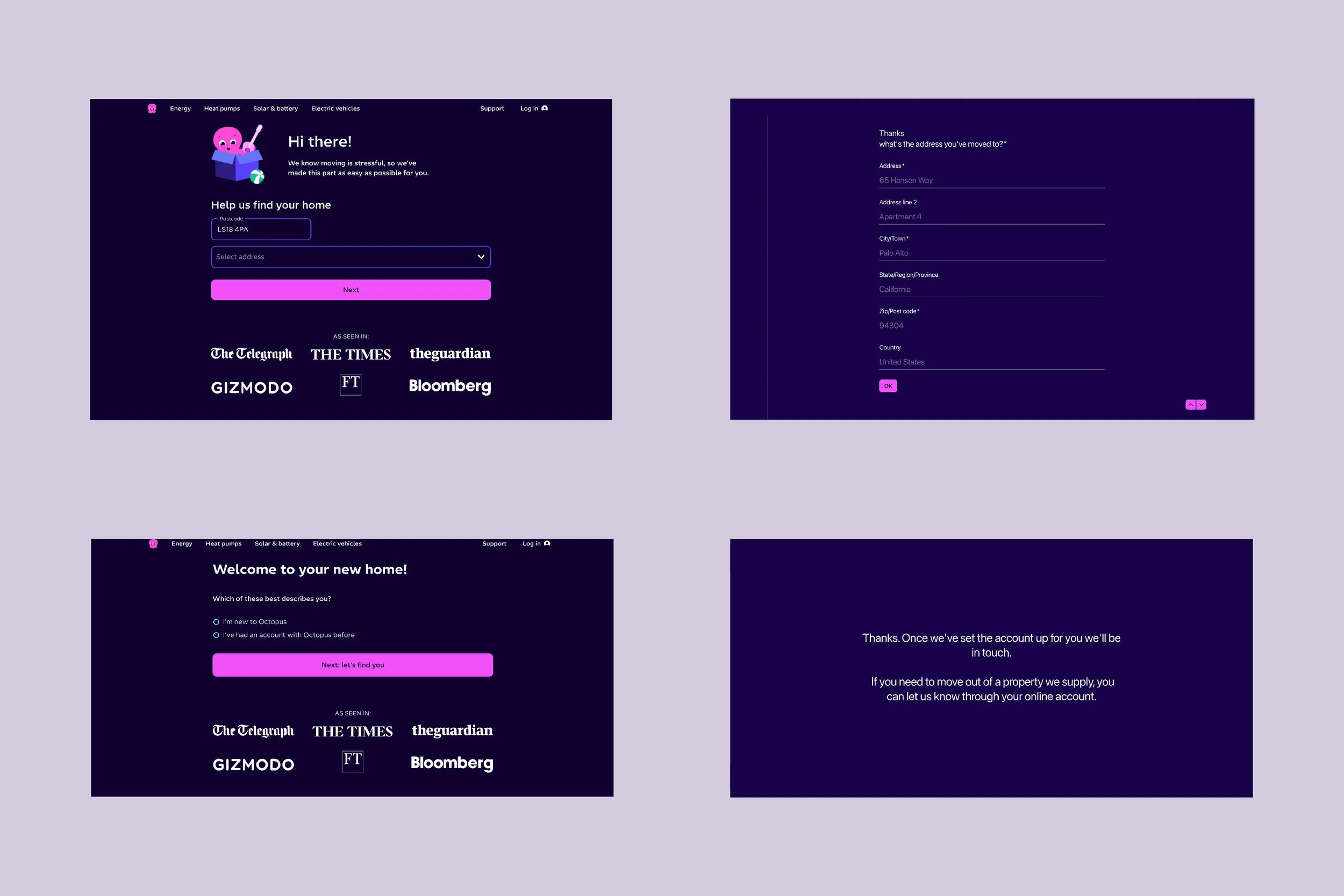
The online moving in form
The simplest of forms
When visiting the URL provided, a postcode lookup started the process. We selected our address and were asked to enter a few personal details. Oddly, we were asked to enter our address for a second time. Though after a few simple screens we were told Octopus would be in touch once our account had been set up.
This whole aspect of the experience was done via Typeform. You may think it’s strange for a company the size of Octopus to use 3rd party software for a touchpoint like this, but it makes sense.
The form was intentionally simplistic and Typeform offer a great out-of-the-box experience. So why invest in creating your own form if there’s something which can easily be bought and does the job? It’s this kind of lean business strategy which has helped Octopus scale as they have and it was interesting to see this on display in the customer experience.
Radio silence
Firstly, after we completed the form, although happy it was that simple, we were surprised at how little information was given to us. So we went to the Octopus site as if we were a new customer and went through the process of getting a quote. We thought it would be useful to know the available tariffs and expected costs at that stage.
But our biggest problem was the lack of communication from Octopus after this step.
Firstly, we didn’t receive any kind of confirmation email to state we had successfully submitted our information. We then waited weeks to hear our account had been set up, but didn’t receive anything.
It’s admirable to simplify your experience as much as possible, but this can’t be at the expense of supporting the customer to make the next step. It may well be the case that the form we completed, as it was provided by Typeform, didn’t integrate into Octopus’s systems and so we were left in limbo.
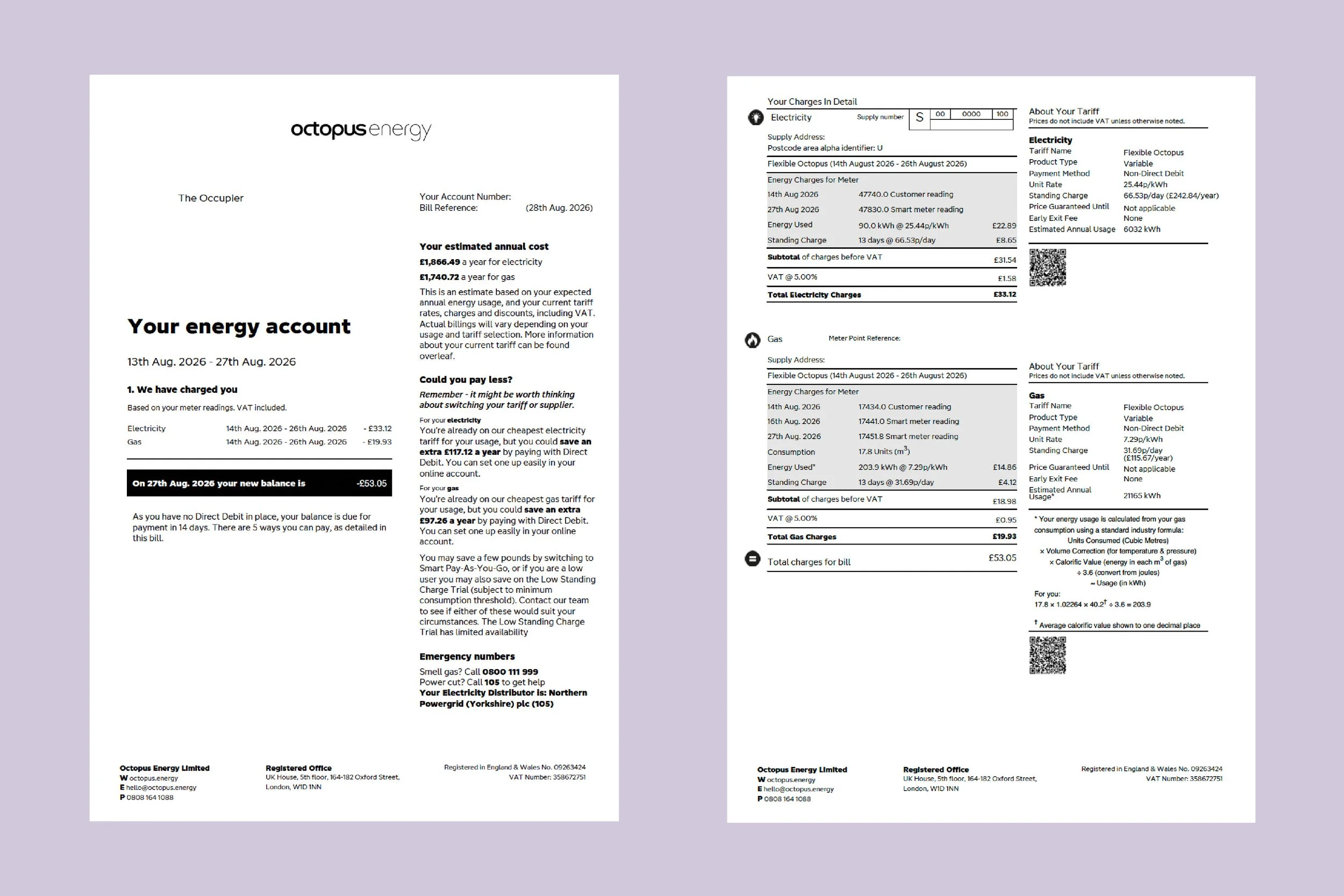
Our first bill
No other option but to call
After a few weeks we really needed to get set up so decided to pick up the phone to Octopus. We had received a bill at this point and we were keen to be put on the right tariff for us.
As they have highlighted in their own marketing, they pride themselves on the service provided at the end of the phone and we had an overall positive experience.
Although our details weren’t anywhere to be found, after a few moments we were able to get set up. We referenced the tariff and monthly cost quoted to us on the website and the representative used those details to select a tariff and set up our direct debit. The bill we had received would be covered by our first direct debit.
The last touch was accessing the app. We had been customers previously and so already had the app installed. A quick reset of our password and we were in. Though oddly, the last property where we were Octopus customers in 2020 was still showing in the app. It did raise doubts about whether we had closed that account successfully.
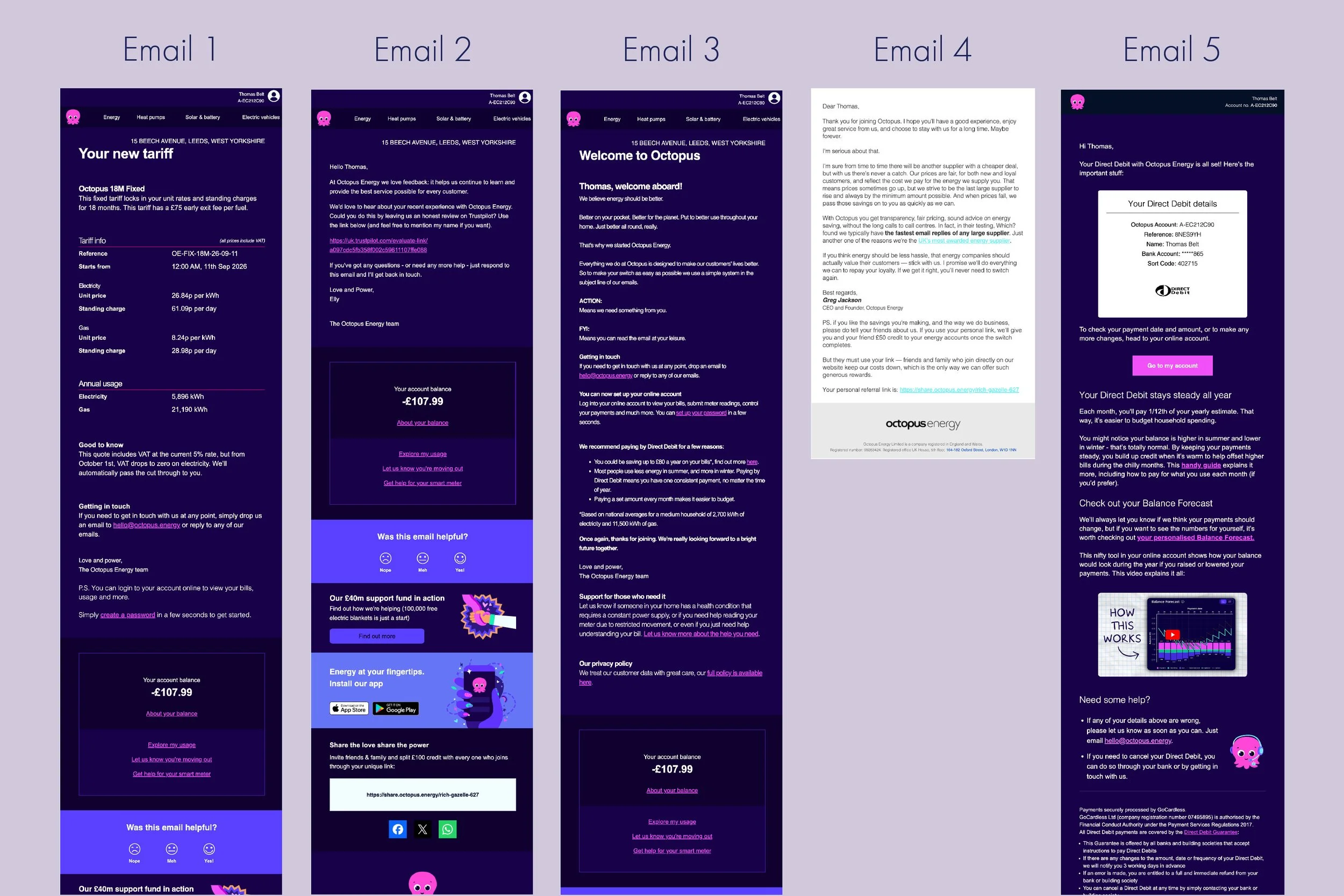
We shortly received emails from Octopus welcoming us aboard. Five emails to be exact. That’s a lot of emails. The first email we received was to give us the details of our tariff. This was followed by a request for feedback, a welcome email, a note for the CEO, and finally a notification of our direct debit set up.
One small touch worth mentioning however was that in the welcome email they let us know about how they start the subject line of all their emails and how it relates to us. ‘Action’ is something we need to do, whereas ‘FYI’ is simply useful info we can choose to read or not.
Nonetheless, at moments like these customers want conciseness. Octopus overcommunicated. What is more, the tariff we had been signed up to was different to the one we had referred to on the website with an additional six months at a fixed price.
Consistency is king
Our journey with Octopus Energy is a great example of one of the core challenges in customer experience. Consistency in experience quality is all important, especially across channels.
If we hadn’t seemingly fallen through the cracks after we filled in the online form to notify Octopus of our move, our experience may well have been very different. No doubt many customers don’t have this issue and are left with nothing but a positive impression.
However, we were left in limbo for a significant element of our journey. Add to this the discrepancy in our tariff, the overcommunication at sign up, and the irrelevant historical information still presented in our app. All in all, we were left with a slightly above average experience but one which fell short of our high expectations.
Reality Score: 6.5/10
The AAWE Score
Reality Score (8/10) - Expectation Score (6.5/10) = -1.5
Reality Score (6.5/10) - 1.5 = AAWE Score (5/10)
Opportunities for growth
Octopus Energy does so much right when it comes to representing their brand as well as how they handle individual moments. When considering opportunities for growth, we focussed on how they could create a more connected customer experience.
1. A connected moving in form
Although we welcomed the simplicity of the moving in form, it appears to exist on an island. Disconnected from much of the rest of the Octopus experience. It should present relevant tariff information, including costs. It should also connect to Octopus’s systems so that confirmation of submission can be communicated to the customer and Octopus themselves can more seamlessly act once the form is completed.
2. Consistency in tariff and customer information across channels
A fundamental aspect of the experience for any energy provider is making the customer feel as though they are on the right tariff for them. We had to complete a separate form to get an idea of the available tariffs. Then, when we requested to be put on a certain tariff we were put on a slightly different one. This shouldn’t happen and all available tariffs should be consistently presented no matter where I am. Furthermore, we shouldn’t have seen information on an account closed six years ago. All information for closed accounts should not be presented to customers.
3. Streamline welcome communications
Finally, receiving five emails moments after signing up felt like overkill. It creates the opportunity for customers to disengage at a moment when they should be more receptive than ever. (Though we’re definitely stealing the classification of comms Octopus use). The first email a customer receives should always be a welcome. The remaining administrative elements they need to know can be dealt with in a second communication. That would give customers everything they need and set you up for success in all your future emails.
Get our Newsletter
You can see a summary of all our future AAWE Scores in our regular newsletter, Touchpoint, along with CX tips, details of future events, and more. If you’re not already on our mailing list, you can sign up.